Case study
RMA: federal museum survey platform
Argentina's official museum registry: a data entry, review and publication system used by every museum, every province and the national government.
Project sheet
- Client
- Secretaría de Patrimonio Cultural
- Year
- 2017–present
- Services
- Web platform development · Internal management tools · Branding and visual identity · UX
- Tech stack
- Django · Django REST Framework (JSON:API) · PostgreSQL · Ember.js · D3 · Google Maps
The Challenge
The Secretariat of Cultural Heritage needed a national museum registry that would be both an official data source and a daily working tool for hundreds of institutions. Each museum fills in an extensive record —identity, building, collections, services, accessibility, staff— that goes through provincial and national review before being published. The system had to support three user tiers with different permissions, an auditable status workflow and bulk exports for statistical analysis, while staying reliable through years of data-model growth.
Our Solution
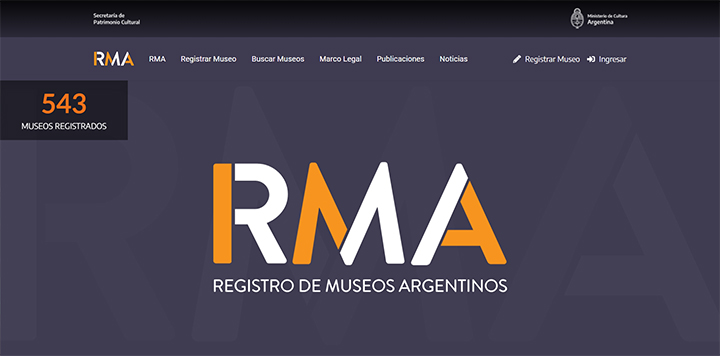
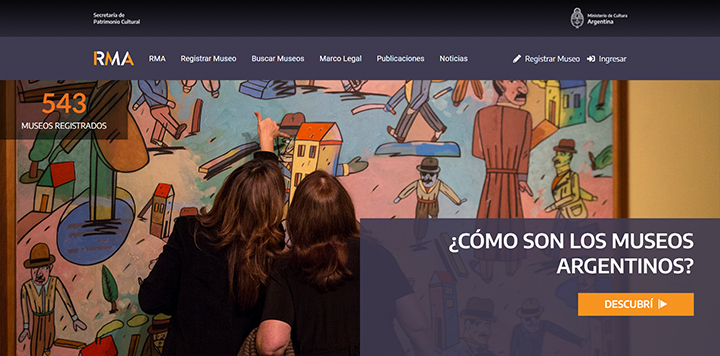
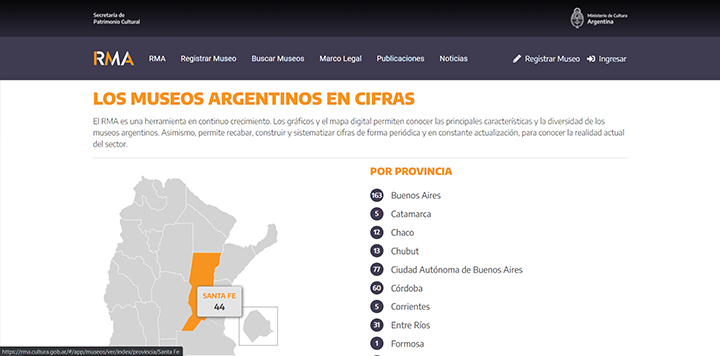
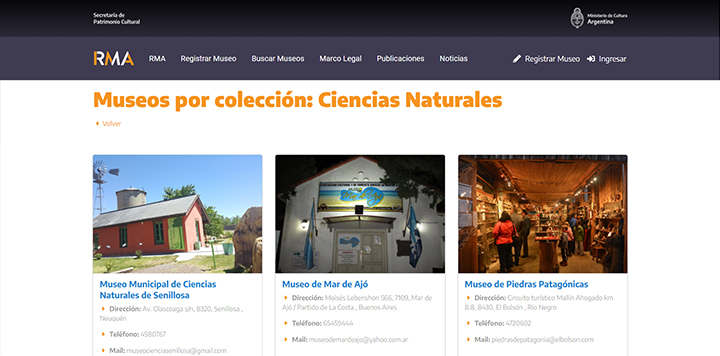
We built a Django REST API following the JSON:API specification with token authentication, on a PostgreSQL data model of about 45 entities that has evolved through more than 170 migrations. Publishing works as a state machine (pending, under provincial review, published, updating, objected) with full change history and access auditing. Each role —museum, provincial officer, National Museums Directorate— only sees and edits what it's responsible for. The frontend is an Ember.js SPA with a guided nine-section form, a public map with marker clustering and D3 visualizations. Excel exports support around 30 filters and more than 100 columns, generated as periodic snapshots so they don't load the production database. In 2021, alongside ongoing technical development, we took on RMA's complete branding and visual redesign: the registry's identity, design system and current look were conceived and built by our team. In 2022–23 we migrated the entire backend from Python 2 to Python 3. The platform runs on ARSAT infrastructure with separate staging and production environments, and we continue to support and evolve it.
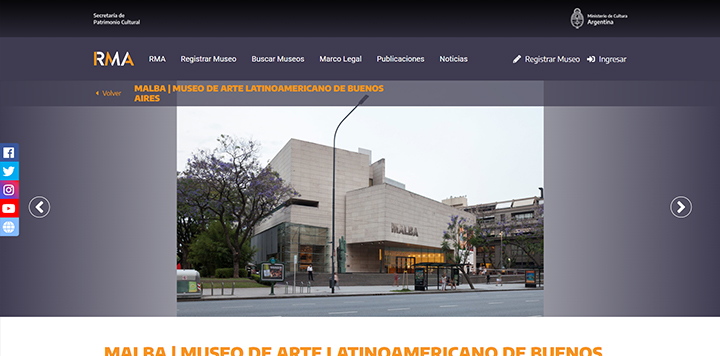
Visual Gallery
Results & Impact
- More than 700 museums published on the official map and close to 1,000 registered in the system.
- A review workflow across museums, provinces and the national level, with full traceability of every change.
- Self-service statistical exports for the National Museums Directorate.
- Its own visual identity and design system since the 2021 branding and visual redesign.
- Almost a decade in production, with the Python 3 migration completed without rebuilding the system.